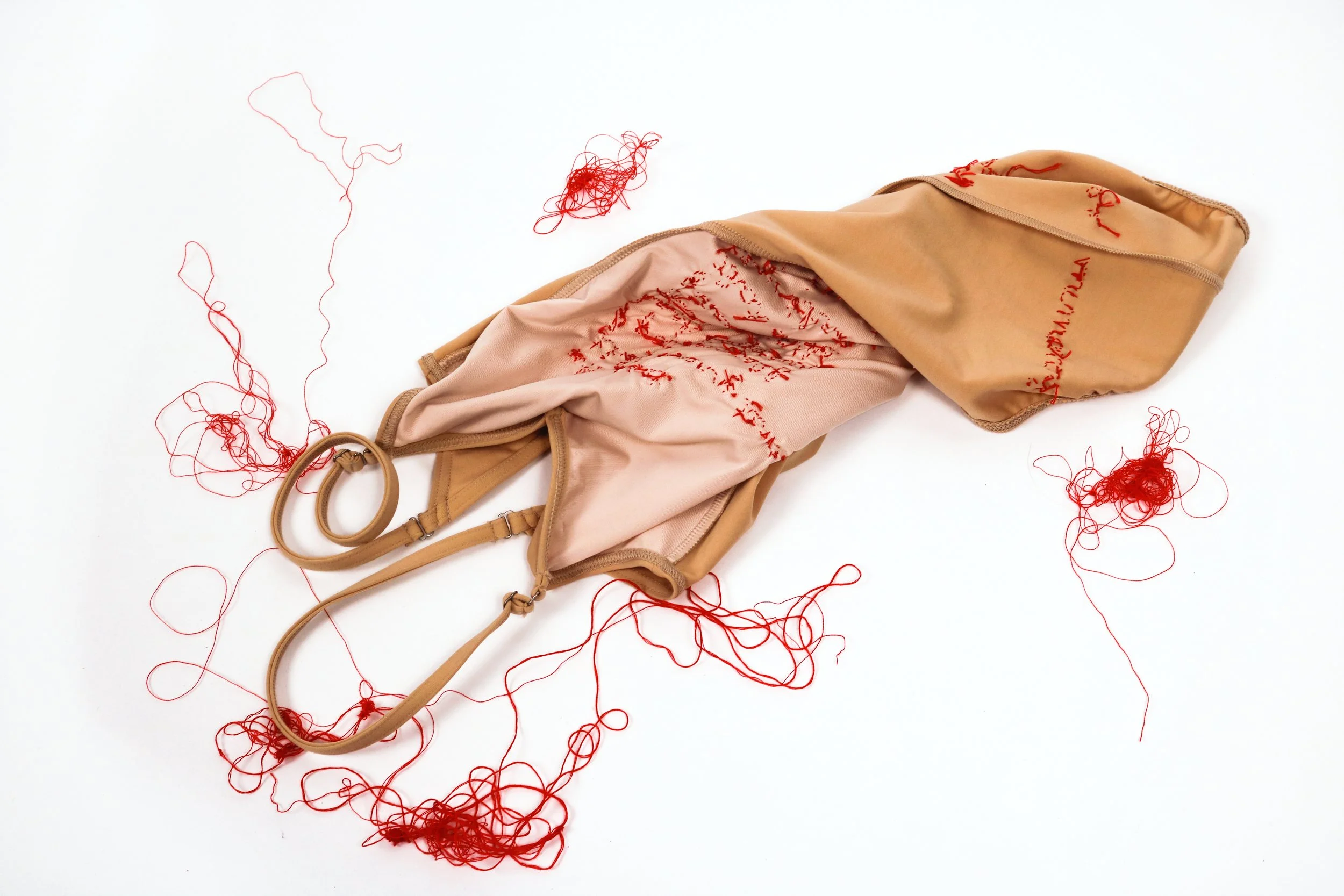
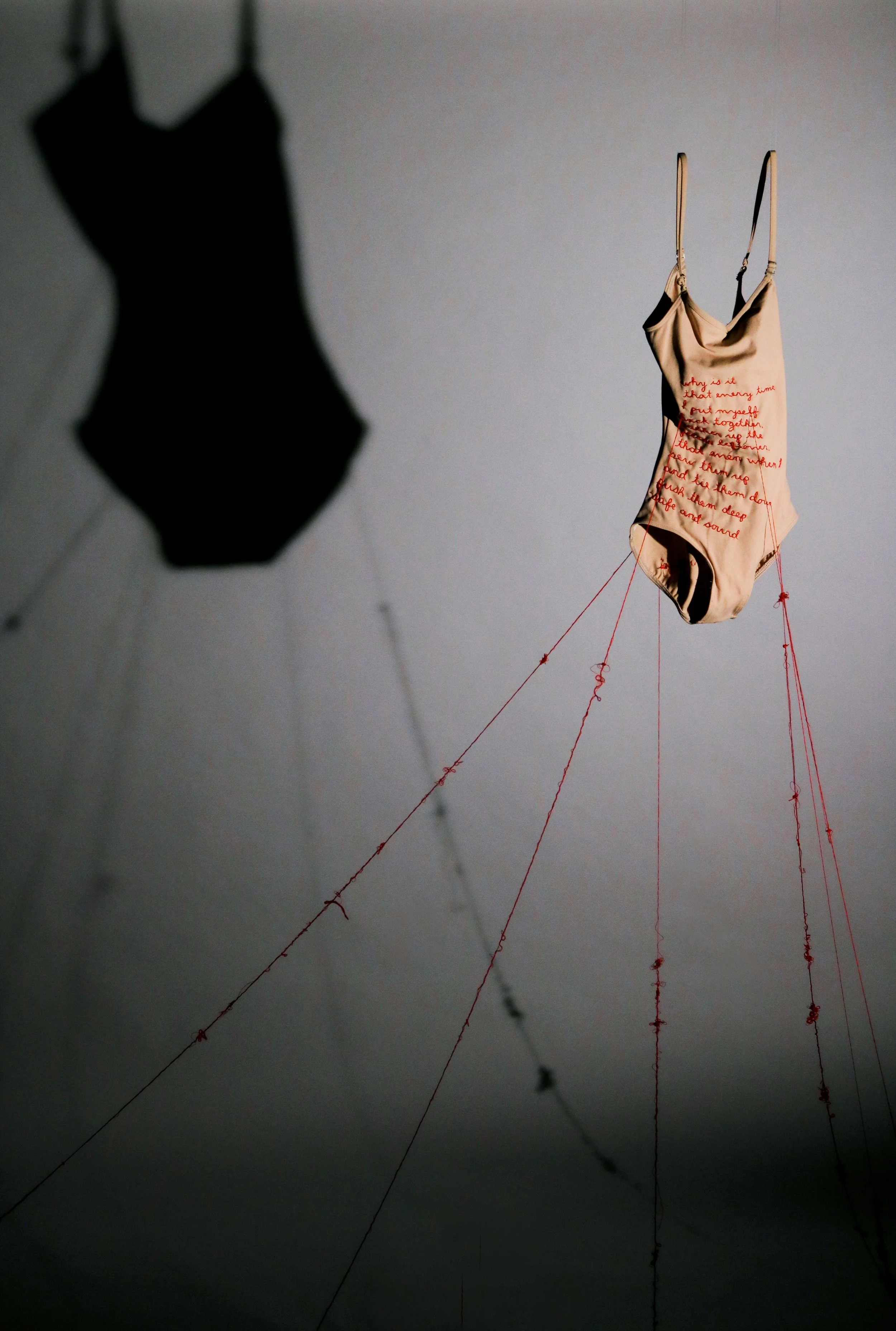
Hand-sewn text on bodysuit, thread, spools
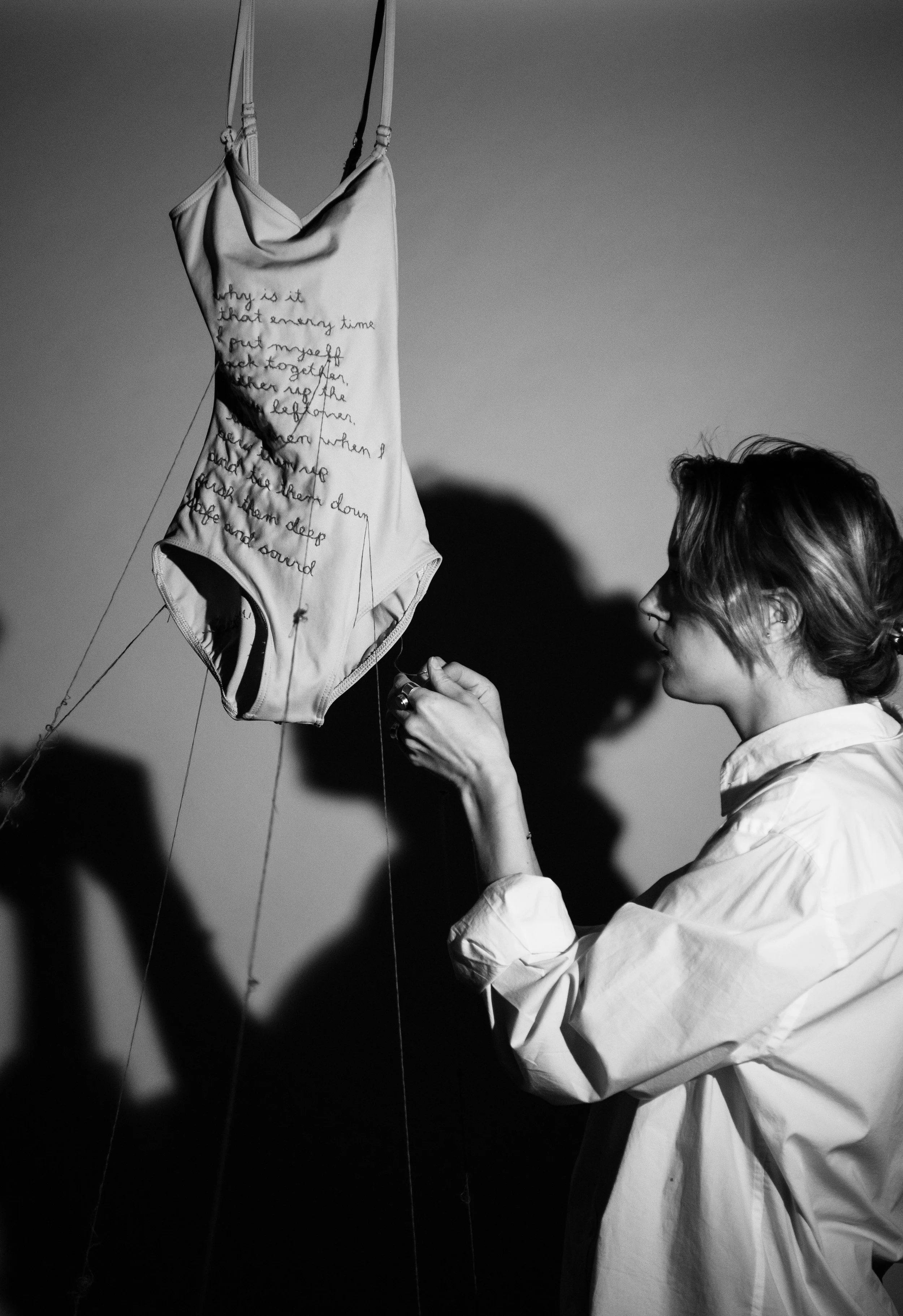
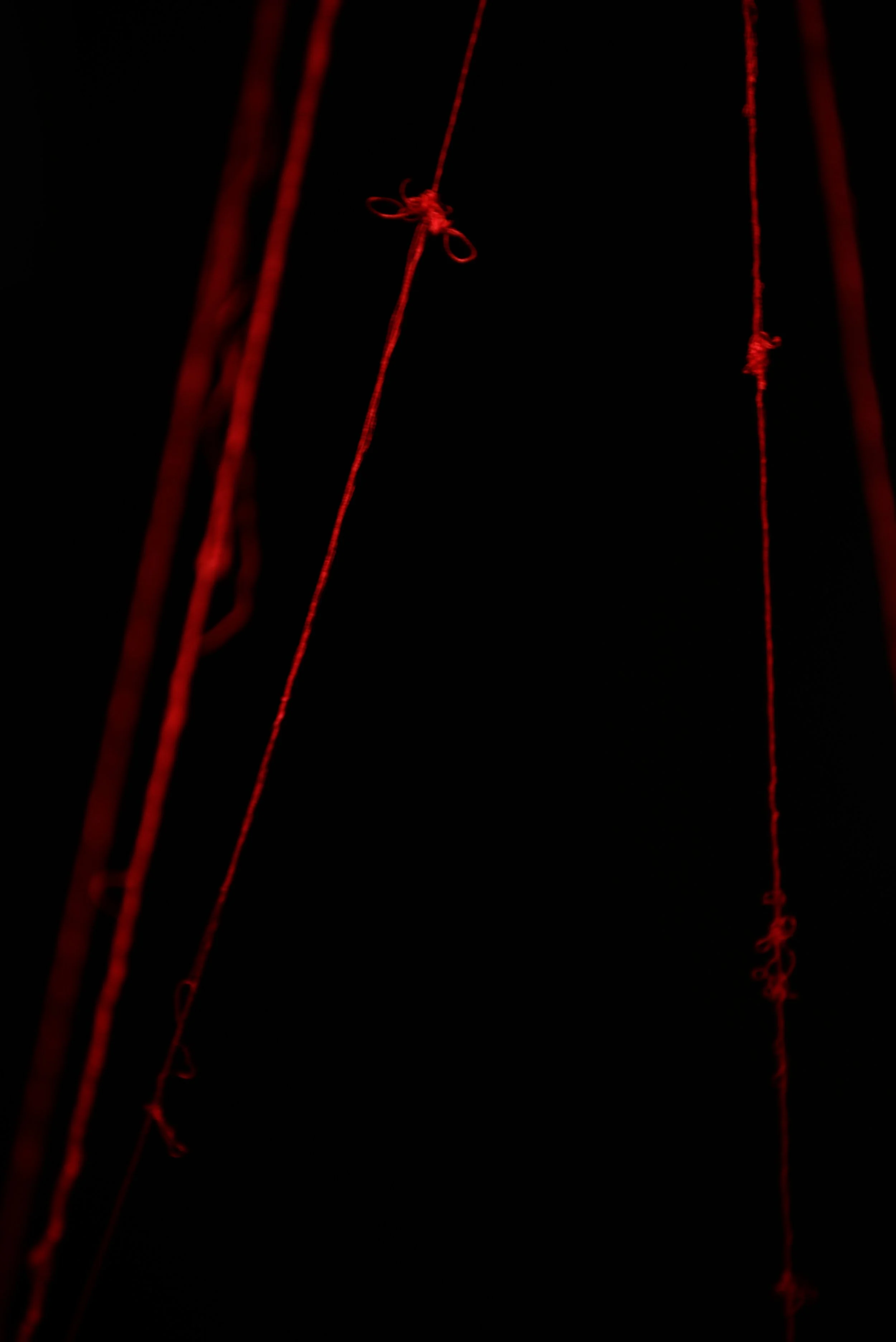
Coming Undone
“Memory has longstanding roots in the body. Sometimes the smell of a scroungy straw or the cry of a bird suffices to throw me far away and deeply into myself. —All that has happened then has been imprinted into the cells of my body. Not into my memory. The cells of the body seem to remember better than memory although it is assigned for that.”
(Koch, S. C., Fuches, T., Summa, M., and Müller, C., 2012)
With the nature of trauma, the state of being is in a constant state of fragility; there is a perpetual, underlying potential for recurrence in a world full of unknown triggers. In this sense, the state of being is continuously challenged by external forces, all of which threaten to throw the body into a state of unraveling.
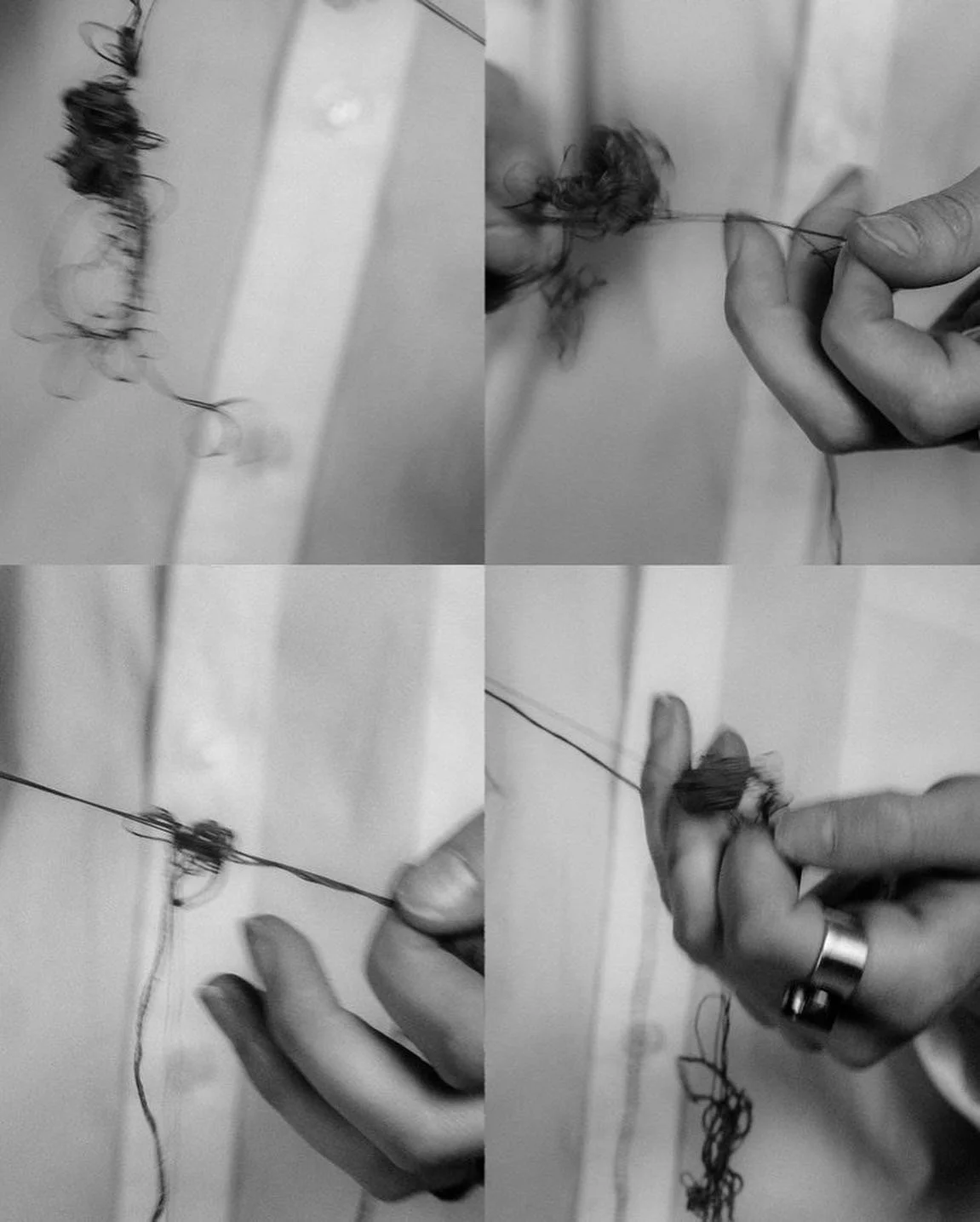
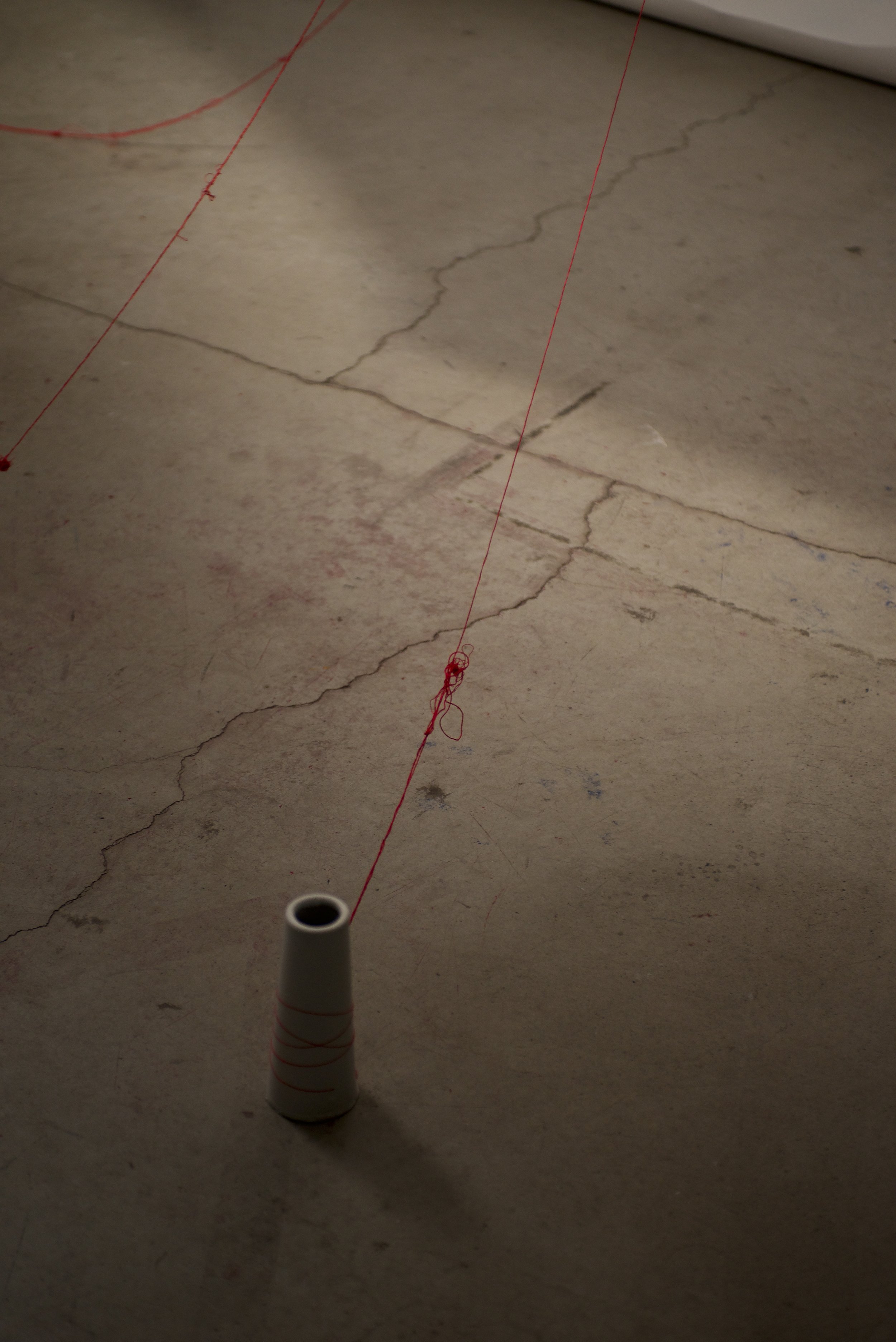
Coming Undone reflects upon this process and state. Hanging from above, the empty bodysuit evokes the remnant shell of what is left after a cycle of unraveling. Coming through it are multiple strands of distressed, red threads that represent the visceral relationship between the external and internal, and the residue of what is left behind. Unwound, yet remaining attached to the spools, the thread continues to hold the potential to be rewound and essentially put back together. This speaks to the ways in which cell memory can be experienced as spontaneous, yet cyclical, as it can disrupt the being over and over again without any warning through triggers, dissociation, and new or repeated traumas.
Reference: Koch, S. C., Fuches, T., Summa, M., & Müller, C. (Eds.). (2012). Body Memory, Metaphor, and Movement. Amsterdam, Netherlands: John Benjamins Publishing Co.
All images taken by Olivia Solodko
All copyrights reserved to Zana Cleo