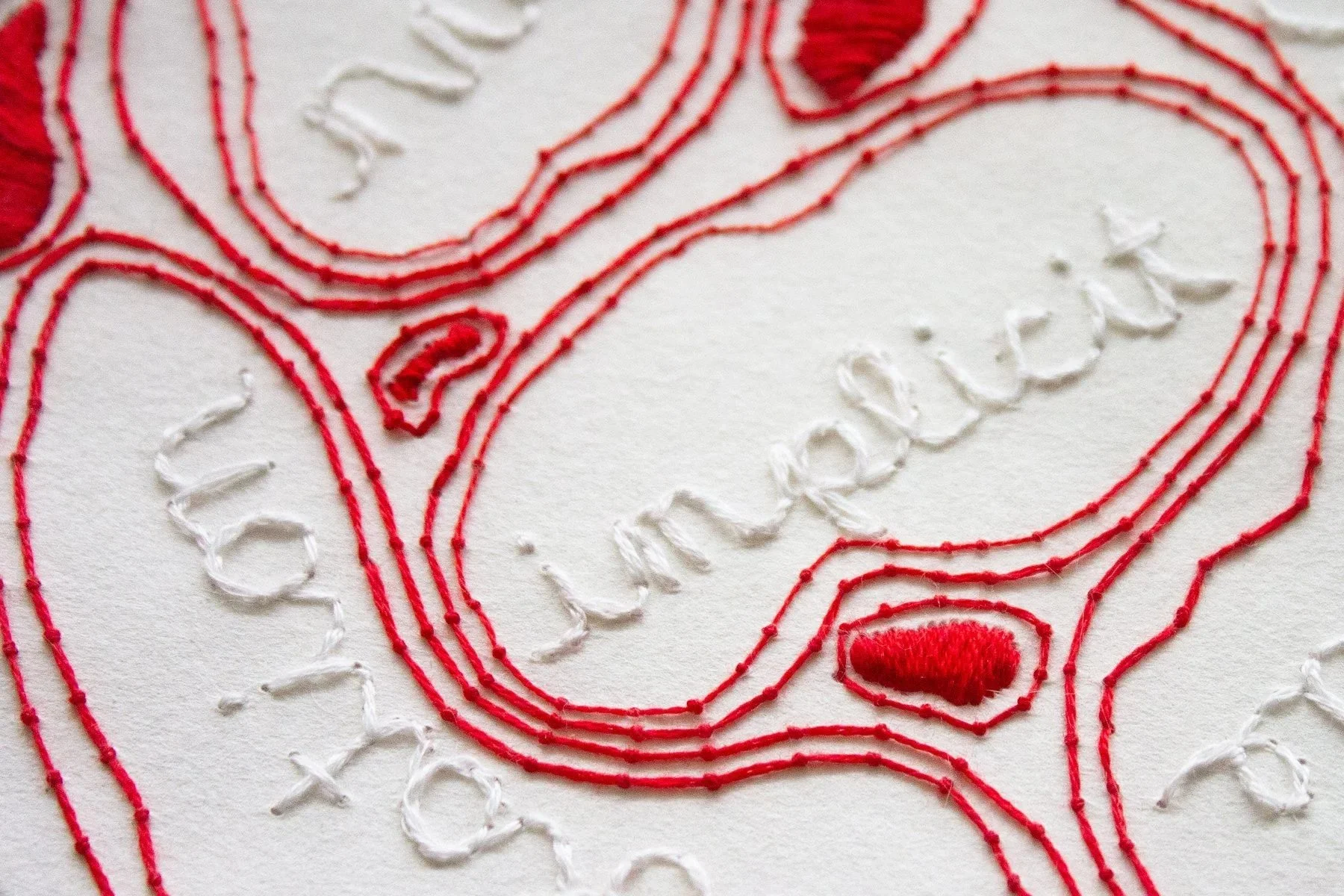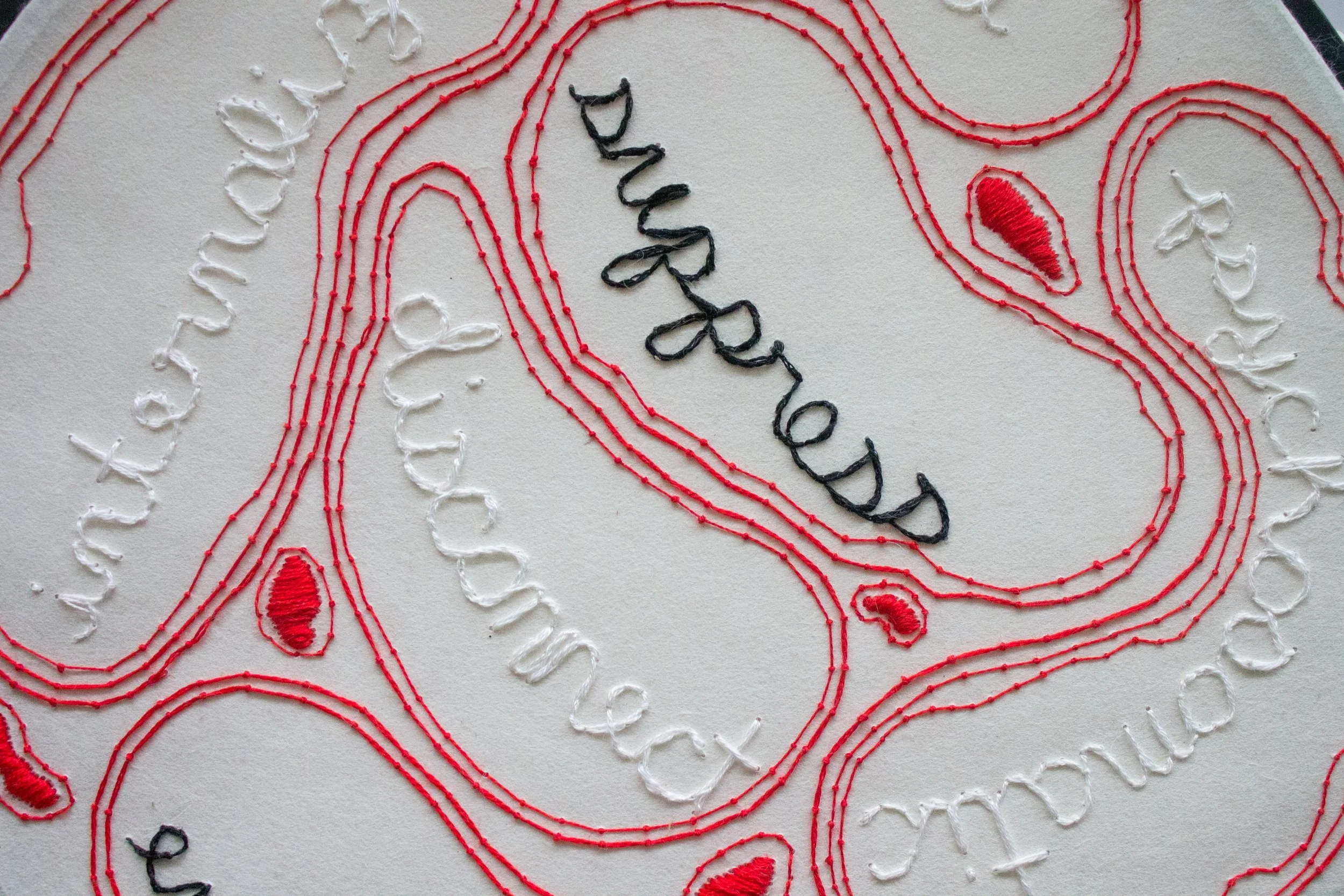
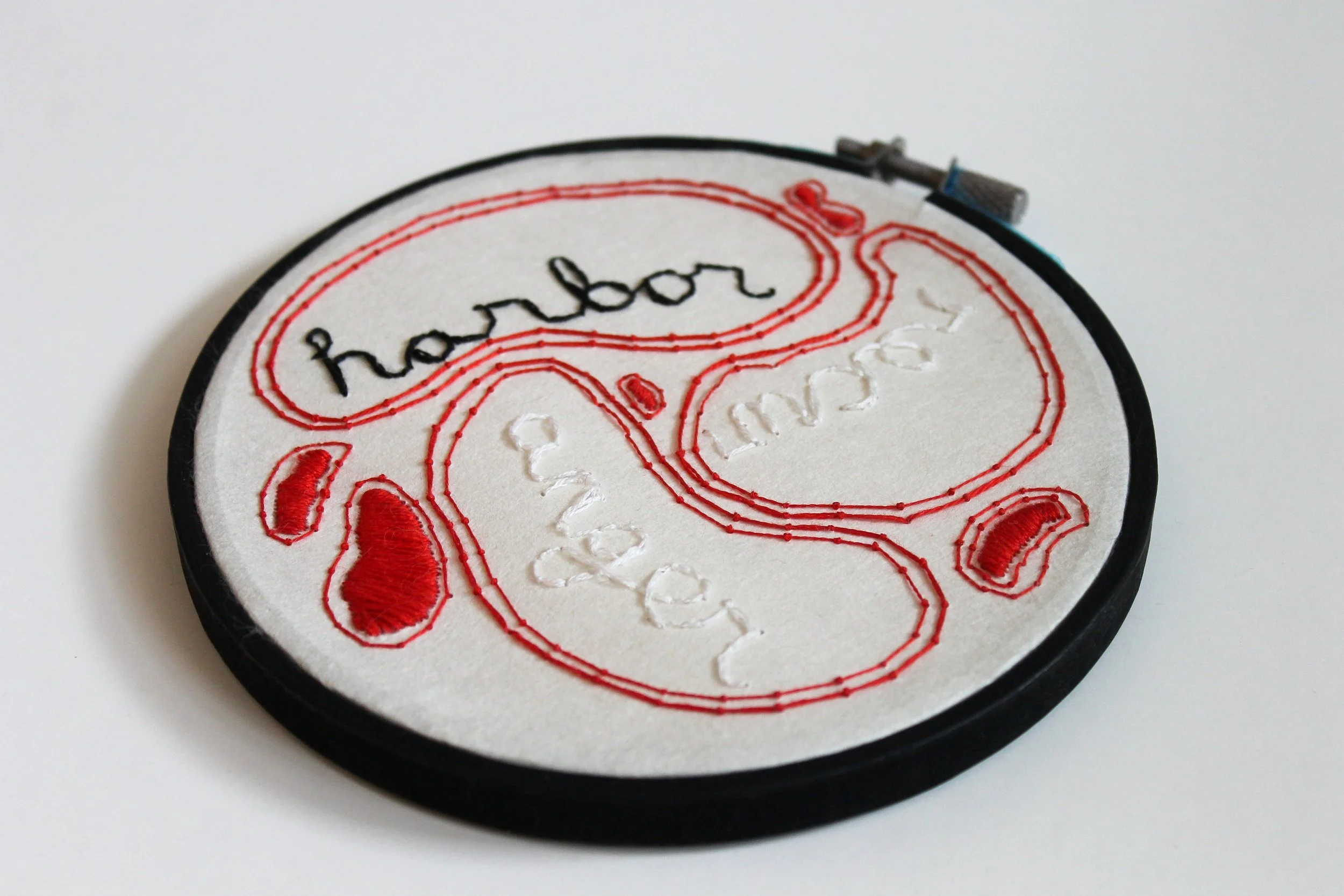
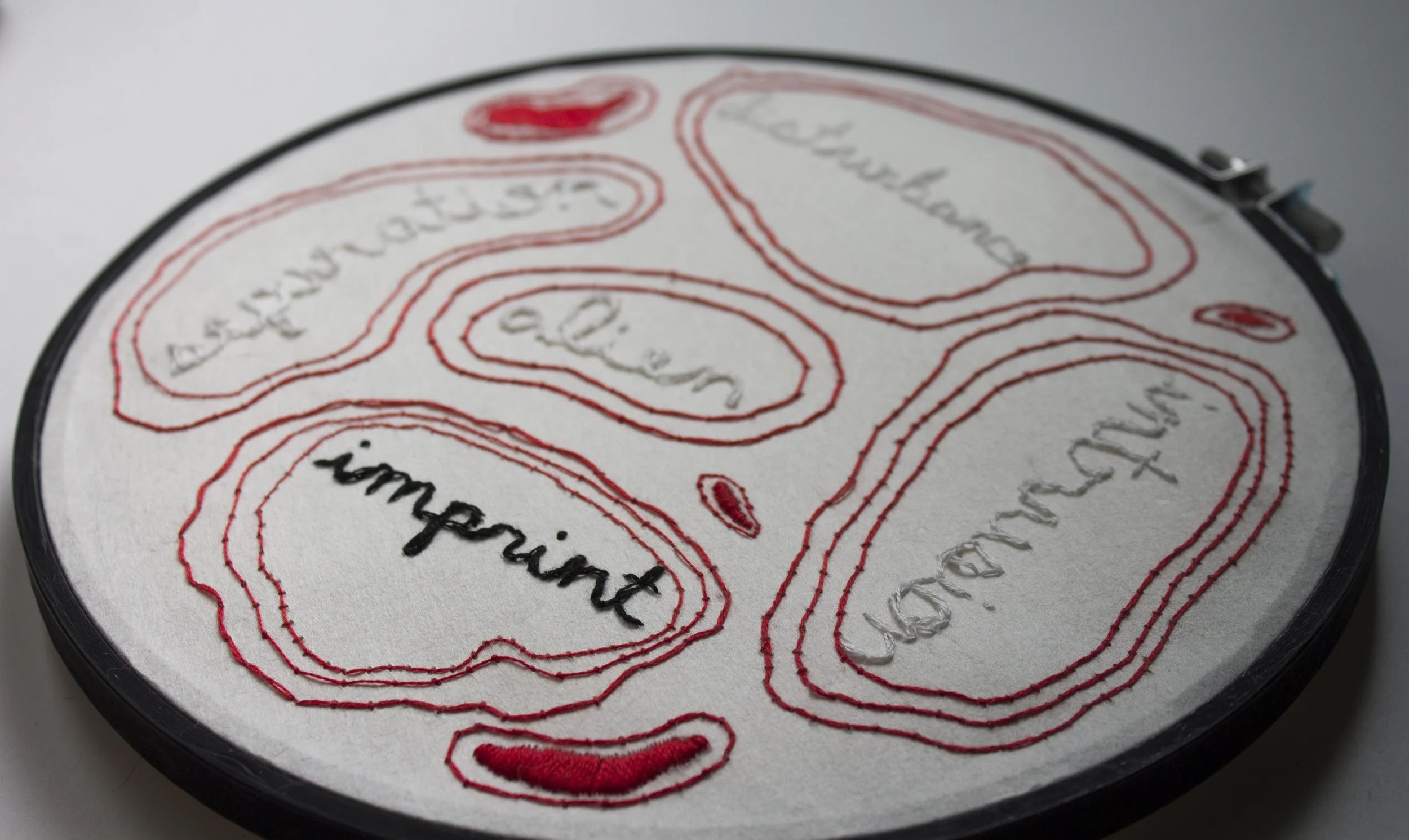
Hand-sewn thread on Japanese paper
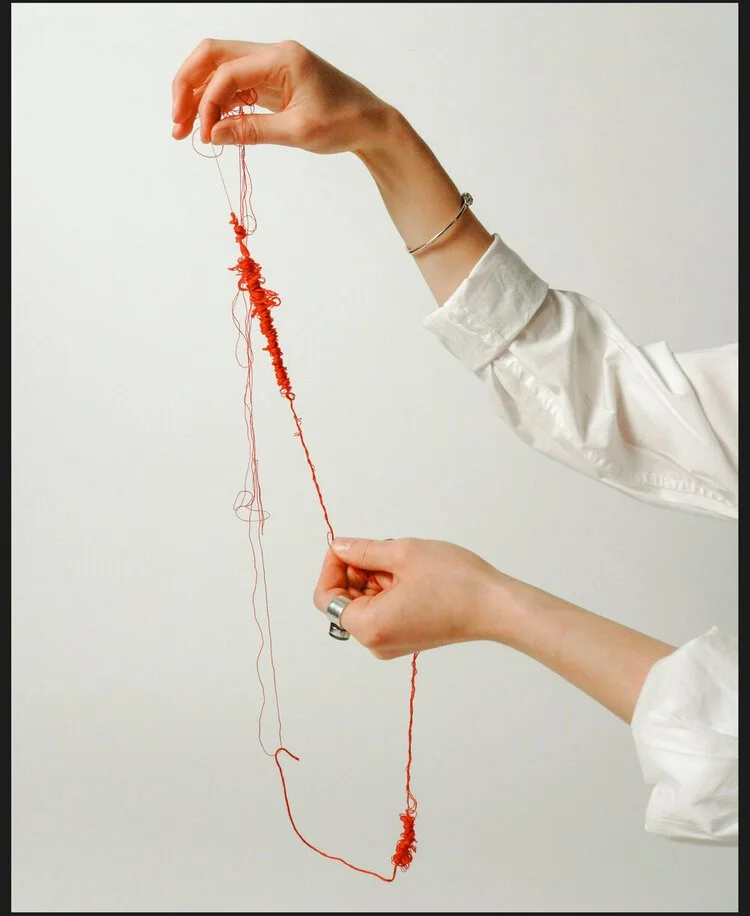
Photo taken by Olivia Solodko
Cellular memory (sometimes interchanged with ‘body memory’), is the theory that memories can be stored beyond the brain, deep “in a psychosomatic* network [that] extends into the body” (Pert 1997). Due to the ways in which traumatic events flood the brain’s memory receptors, they are thereby “distributed along pathways to internal organs and the very surface of [the] skin,” (Pert 1997). As such, cell memory refers to the ‘imprints’ trauma makes on the psyche and soma, and the impacts this has on the mindbody** thereafter.
Examining the ways in which cell memory both impacts and interrelates with the body, mind, and sense of self, these petri dishes deconstruct cell memory into five realms: ‘trauma’, ‘resentment’, ‘repression’, ‘anorexia’, and ‘disruption’. Reflecting upon the intimate relationship of her own connection to cell memory, the artist confronts and materializes her own experiences while aiming to mend the relationship with her cells in the process. Using the act of sewing as an extension of her body and mind, this process allows the artist to meditate upon her experiences and work through them both internally and externally.
*Psychosomatic: of, relating to, concerned with, or involving both mind and body; of relating to, involving, or concerned with bodily symptoms caused by mental or emotional disturbance (Merriam-Webster Dictionary)
**Mindbody: connected with the relationship between the mind and the body and how mental processes and physical processes affect each other (Cambridge English Dictionary)
Reference: Pert, C. B. (1997). Molecules of Emotion. New York, NY: Scribner.
Cellular Level
All copyrights reserved to Zana Cleo